A Tradition
Three and a half centuries of filter coffee.
From a saint's beard to a brass tumbler on a marble counter — the story of how the South of India learned to love coffee, slowly.
- 1670
Seven smuggled beans
The Sufi saint Baba Budan returned from Mocha with seven coffee beans hidden in his beard. He planted them on the hills of Chandragiri in Karnataka — the origin of every cup of South Indian coffee that followed.
- 1900s
The brass filter arrives
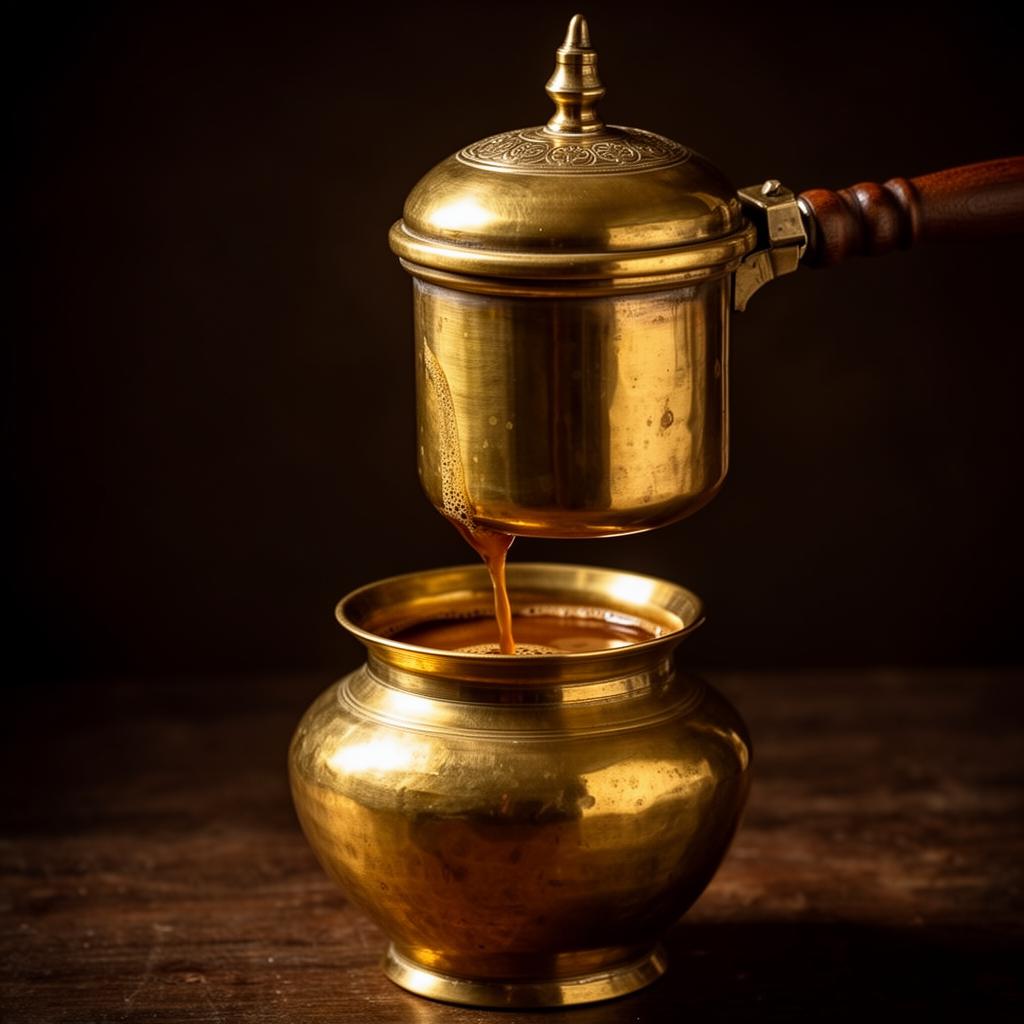
Tamil households adopted the two-chamber brass filter — an Indian reinvention of the French drip — letting hot water steep slowly through a dense bed of coffee and chicory. The decoction it produced was thick, dark, and unmistakably ours.
- 1947
Coffee houses of Madras
Independence-era coffee houses became the salons of South India — places where poets, freedom fighters and clerks shared a tumbler of degree kaapi at the marble-top tables. Davara opened in a Mylapore lane that same year.
- Today
The ritual continues
We still pour from a height — the long stream cools the kaapi from scalding to drinkable, builds the froth, and lets you smell the chicory before you sip. Nothing about it has been hurried.